
A hunting camp can go from dialed to disorganized in one evening. Wet boots end up beside dry layers. Headlamps disappear under sleeping bags. Food gets pushed into a corner, and the one piece of gear you need before daylight is suddenly at the bottom of a pile.
That is more than an inconvenience. Damp ground, condensation, spilled food, and rodents can turn critical gear into a problem before the next sit or morning push begins.
A good basecamp system does not need to be complicated. It needs to keep wet gear away from dry gear, food away from sleeping areas, and tomorrow morning’s essentials where you can find them in the dark.
Divide Basecamp Into Working Zones
Before unpacking, give each part of camp a job. Even a small shelter runs better when equipment is not scattered wherever it first lands.
Set up four basic zones:
-
Sleep zone: Sleeping bags, pads, and dry base layers.
-
Gear zone: Packs, optics, calls, headlamps, batteries, and other field equipment.
-
Wet zone: Boots, rain gear, gaiters, and anything carrying mud or moisture.
-
Food zone: Food, cooking supplies, trash, and scented items stored according to campground rules and local wildlife guidance.
Keep the wet zone nearest the entrance when possible. That gives mud and water less ground to cross before gear comes off. Keep the sleep zone farthest from wet equipment, cooking, and food storage.
Get Critical Gear Off the Tent Floor
Even when a shelter floor looks dry, moisture can collect beneath packs, clothing, and duffels. Ground contact also makes gear easier for insects and rodents to reach.
Use cots, shelves, hooks, lines, or empty seats where appropriate to keep important items raised. Do not overload shelter loops or hang heavy gear from attachment points unless the shelter manufacturer says they can support it.
Prioritize these items:
-
Insulation layers and dry socks
-
Sleeping bags
-
Optics and electronics
-
Ammunition stored according to all applicable safety requirements
-
First aid supplies
-
The pack you need the next morning
Raised storage helps, but it does not replace ventilation. Open approved vents when conditions allow and avoid packing wet apparel tightly into a closed bag overnight.
Use One Gear Bag as the Camp Locker
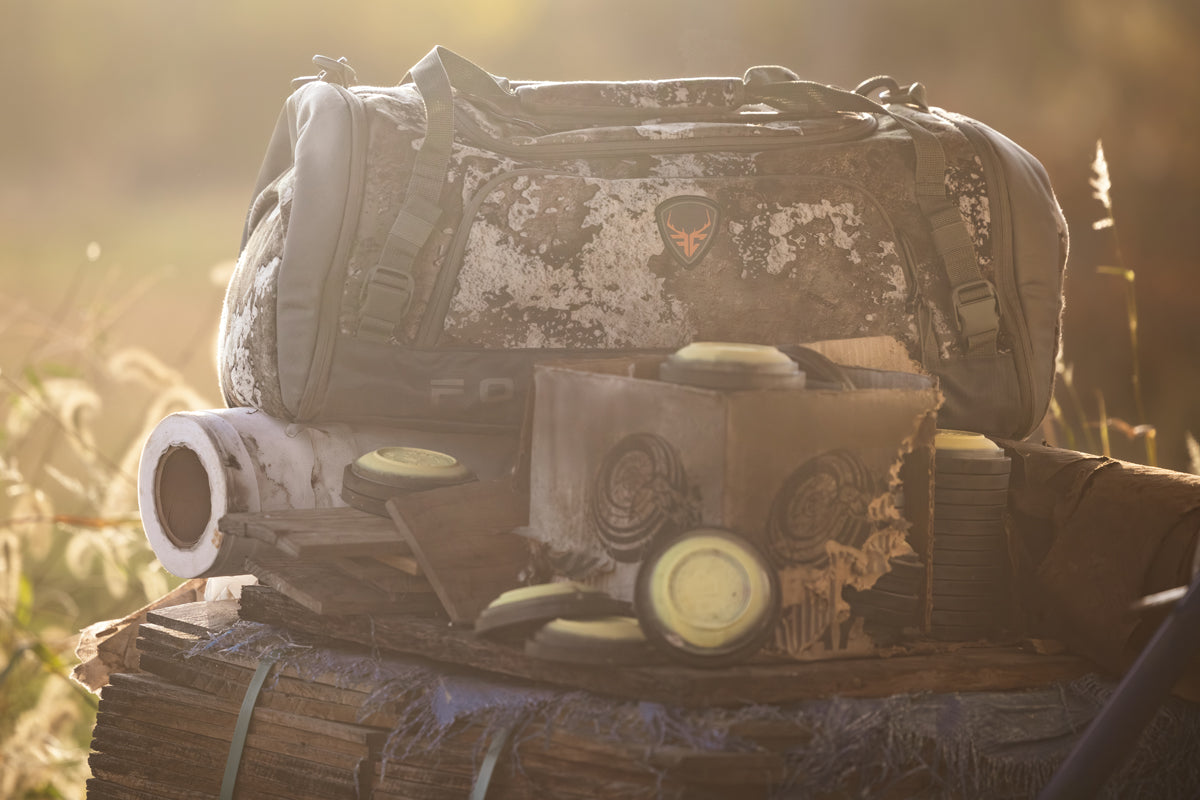
Loose equipment is easier to manage when it returns to the same place every time. The Icon Pro Gear Bag provides 48 liters, or 2,900 cubic inches, of storage for apparel, boots, and camp equipment.
The large main compartment handles bulkier gear, while external zippered compartments and internal organization separate smaller items. A floating boot pocket helps isolate footwear from clean layers. Compression straps hold the packed load steady, and padded hidden side handles plus a removable shoulder strap give you options when moving the bag between the truck and camp.
Use the main compartment for dry clothing and larger pieces. Put frequently used items, such as gloves, a beanie, batteries, or a headlamp, in a consistent quick-access pocket. When every item has a known location, getting ready before daylight takes less time and less light.
Separate Wet, Dry, and Dirty Gear
One bag can organize a lot, but wet equipment should not be sealed against dry apparel. Use breathable hanging space for damp layers when conditions allow. Keep muddy boots and gaiters in their own zone until they can be brushed clean and dried.
A practical rotation looks like this:
-
Coming in: Remove wet outer layers and boots near the entrance.
-
Drying: Hang damp items with airflow, following all shelter and heat-source safety guidance.
-
Ready pile: Stage completely dry layers for the next hunt.
-
Repair pile: Set aside torn straps, missing buckles, dead batteries, or anything that needs attention.
Never drape clothing over a stove, heater, lantern, or open flame. Follow the equipment manufacturer’s clearance requirements and ventilation instructions.
Keep Food and Scented Items Out of the Sleep Zone
Food management depends on where you hunt. Some areas require bear-resistant containers, food lockers, vehicle storage, or specific hanging methods. Follow the rules for the land you are using and the guidance for the wildlife in that area.
Keep food, trash, cooking equipment, toothpaste, and other scented items together and away from sleeping gear. Clean up spills immediately. Do not store food in a gear bag that will later carry clean hunting apparel unless the bag has been thoroughly cleaned and dried.
The goal is simple: food has one controlled location, and wrappers or scraps never drift around camp.
Stage the Next Hunt Before Turning In
The last ten minutes at night can save time and frustration the next morning. Refill water, check batteries, return calls and tools to their usual pockets, and lay out the layers you plan to wear.
If you are heading out with the Expedition Pack, organize the 85-liter main compartment so the first items needed are not buried. Use the large side pockets, hood pocket, water-resistant accessory pouch, and ripstop accessory pouch to separate smaller equipment. Confirm that compression straps, YKK® zippers, and Duraflex® hardware are secure before the pack leaves camp.
Do not wait until the alarm goes off to discover that a glove is still wet or the headlamp is in somebody else’s truck.
A Better Camp Starts With a Repeatable System
Basecamp organization is not about making camp look perfect. It is about knowing where your equipment is, keeping dry gear dry, and reducing problems before the next hunt.
Create clear zones. Get important equipment off damp ground. Separate boots and wet layers from clean apparel. Give food its own controlled area. Then reset the system every night.
That routine keeps camp working, even when the weather and the hunt do not follow the plan.
FAQ: Hunting Camp Organization
How do you keep hunting gear dry at basecamp?
Keep gear off the shelter floor, separate wet items from dry layers, use approved ventilation, and allow damp equipment to dry fully before packing it into a closed bag.
How should I organize a hunting tent?
Create separate areas for sleeping, dry gear, wet boots and outerwear, and food. Keep walkways and exits clear, and follow all shelter instructions for hanging or storing equipment.
Where should food be stored at hunting camp?
Storage requirements depend on the location and wildlife risk. Follow land-manager rules for bear-resistant containers, lockers, vehicles, or approved hangs, and keep food and scented items away from the sleep zone.
What should I prepare the night before a hunt?
Stage dry clothing, refill water, check headlamp batteries, organize calls and field essentials, and inspect the pack’s straps, zippers, and buckles.
Preparing Your Pack for Opening Day: Frame Adjustments, Load Management, and Essential Gear
How to Load a Hunting Pack for Heavy Multi-Day Gear